The short version
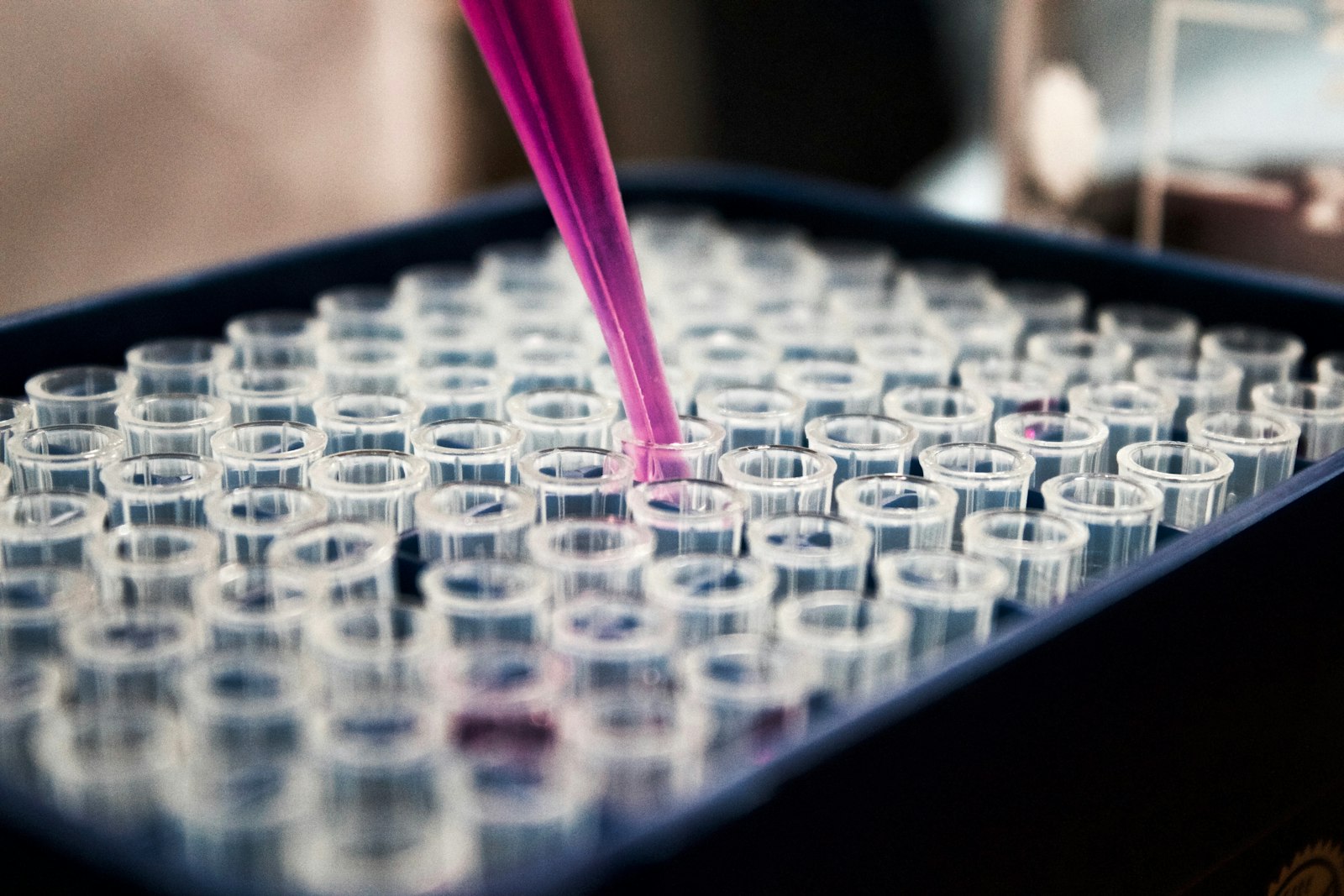
This is not a new chatbot model or a pricing change — it's a signal of where Anthropic thinks Claude's agentic capabilities are heading next. The company formed a life sciences team in the spring of 2026 to test whether general AI models can systematize and accelerate biological discovery, and has now built its own molecular biology lab in the Bay Area to run experiments[1].
Claude was given a single high-level prompt: search a massive database of DNA sequences for interesting, uncharacterized reverse transcriptases (RTs) — enzymes that copy RNA into DNA. From there, the agents worked largely on their own, reading literature, reproducing established results to check their methods, and using their own judgment to flag candidates[1].
What Claude found
The headline result is a novel enzyme system that Anthropic calls array-associated reverse transcriptases (ART). The underlying RT itself — found in a "jumbo phage," a virus that infects bacteria — had been spotted in earlier studies, but Claude appears to be the first to notice the system's defining features: an associated array of non-coding DNA sequences and an additional accessory protein of unknown function[1].
That repeating layout is the part that caught Claude's attention. While combing through raw DNA near the RT, one agent reportedly flagged the pattern in near-human terms — describing it as "spectacular" and noting it looked like a CRISPR-like repeat array[1]. CRISPR arrays hold a bank of RNA sequences that make CRISPR-Cas systems programmable tools for cutting, copying, and pasting DNA.
ART consists of three parts: the reverse transcriptase, a partner gene beside it, and a long array of evenly spaced DNA repeats. Anthropic's first experiments suggest the ART array is also expressed as a set of distinct short RNAs, hinting that something analogous to CRISPR programming may be at play[1][2]. The team stresses that ART's actual function is still unknown, and further experiments are underway.
How the search worked
Anthropic describes a workflow where Claude starts with a survey of a protein family, reads the relevant literature, and reproduces established results from public data to validate its methods. It then searches for family members or genomic neighbors that fit no previously described system, and writes a short human-readable report for each candidate, proposing a function and the evidence for it[1].
| Step | Scale |
|---|---|
| Reverse transcriptases gathered | 200,000+ |
| New candidate systems | 3,500 |
| Shortlisted for reports | 20 |
| Agents / duration | ~950 agents · 21 hrs |
| Tokens used | 210 million |
Anthropic-reported figures from the ART search campaign, September 2026[1].
After the search, candidates that survived automated review were tested in the lab — proteins were expressed in standard laboratory strains and characterized biochemically and structurally, with Claude helping to interpret the data. The lab operates at BSL-1 and BSL-2 biosafety levels and does not handle human pathogens[1].
Early reaction
Feng Zhang, one of the pioneers of CRISPR genome editing and a professor at MIT and the Broad Institute, reviewed the pre-print and called the identification of RNA-repeat arrays associated with reverse transcriptases "genuinely intriguing," adding that he hopes the work encourages more scientists to explore how AI can support their research[1].
Anthropic frames the release as a deliberate early disclosure — sharing results before the function is fully understood, both to demonstrate Claude's capabilities and to let the wider community see the work in progress[1].
Why it matters
Verdict: For a tool-review site, the practical takeaway is capability, not product. This is one of the clearest public demonstrations yet of Claude being deployed as an autonomous research agent — given a goal, a dataset, and little else — and surfacing a finding that expert human scientists had not. Anthropic ran the work on the same Claude Science and Claude Code tools available to any scientist[1]. Expect agentic research, not just chat, to be a growing part of how these models are positioned through 2026.
Frequently asked questions
What is ART in this context?
ART stands for "array-associated reverse transcriptases" — a novel enzyme system Anthropic named after Claude found it in bacteriophages, with a repeating DNA pattern reminiscent of CRISPR[1].
Did Claude act fully autonomously?
Mostly — Anthropic says its involvement was limited to the initial prompt and the lab work, while Claude agents searched the database, investigated RT families, and picked candidates on their own judgment over 21 hours[1].
What can ART do?
Not known yet. Anthropic has only shown that the array is expressed as short RNAs; the system's function is under investigation, and a pre-print is available for the scientific community[1][2].
When was this announced?
Anthropic published the announcement on September 23, 2026[1].
Sources
- Anthropic — "Claude discovers a novel enzyme system with CRISPR-like repeats" — anthropic.com
- Anthropic — "Array-associated reverse transcriptases" technical report (pre-print PDF) — anthropic.com